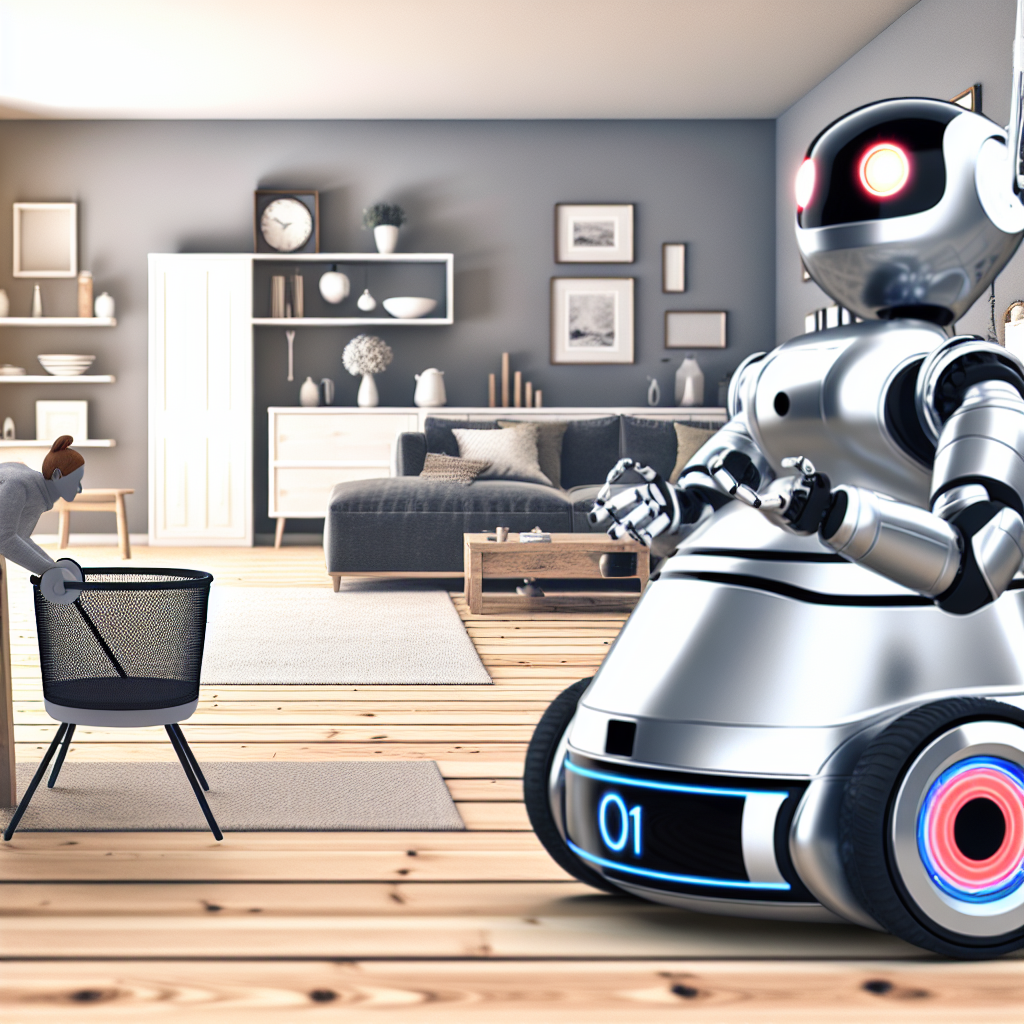
## Ctrl Alt Perspective: The Promises and Pitfalls of Rover X1
As technology advances at a startling pace, it’s hard not to get swept up in the excitement of what’s next. Among the most intriguing developments in recent memory is **Rover X1**, a $1,000 robotic companion that promises to reshape how we approach daily living. This device aims to redefine not only convenience but also companionship. But as with any emerging technology, it’s essential to take a step back and evaluate both its potential benefits and drawbacks.
### The Allure of Companion Robots
Rover X1 joins the growing trend of companion robots aimed at enhancing user experience through functionality and interaction. As consumers already enjoy smart home devices and AI assistants like Alexa, the leap to a robotic companion suggests a new landscape where technology is integrated into our lives more personally.
We’ve seen a shift from robots as mere tools to more interactive entities. The evolution of robotics is exemplary of this change; machines that once only performed dull, dangerous, or dirty tasks now engage with humans in meaningful ways. Rover X1 embodies this shift, but how does it truly perform in practice?
### What Sets Rover X1 Apart?
Rover X1 boasts an array of capabilities designed to lighten the load of daily life:
1. **Grocery Carrier**: The robot promises physical help by carrying groceries, making life easier for those who struggle with loads or mobility. This functionality addresses a common issue many face, especially in urban settings where carrying heavy bags can be perilous.
– **Technical Insight**: Rover utilizes advanced sensors to navigate spaces intelligently, avoiding obstacles and safely maneuvering through crowded sidewalks. This is achieved through algorithms that map out the environment and make real-time decisions on navigation.
2. **Running Partner**: For fitness-oriented individuals, Rover X1 acts as a jogging companion, equipped with tracking capabilities to monitor statistics such as pace and distance.
– **Deep Dive**: While some may see this as merely an innovative exercise aid, it also introduces the concept of accountability in fitness. This can be significant in motivating users who might otherwise skip their runs.
3. **Home Security**: The robotic assistant takes on an added role by patrolling your living space, providing a sense of security and the ability to monitor disturbances.
– **Industry Comparison**: Other smart home devices—like cameras and alarms—offer some overlap, but Rover X1 combines mobility with surveillance. This potential for dual use could make the security aspect of home automation more accessible and less intrusive.
### Assessing the Emotional Connectivity
Rover X1 is not just about performing tasks; it taps into our emotional need for companionship. Many young professionals or seniors might find solace in having Rover waiting at home, providing an element of interaction that might be missing in their lives.
This raises questions about the future emotional implications of robotics in our homes. Is it beneficial to form attachments to machines that imitate human interaction, or does it diminish our empathy towards others? The implications extend to how reliance on technology may lead to reduced in-person interactions in our communities.
### The Balance of Affordability and Functionality
Starting at a compelling **$1,000**, Rover X1 paves the way for the accessibility of robotics—especially compared to previous models from competitors that hover around $2,000 or $3,000. This affordability enables a broader demographic to explore personal robotics.
However, it’s important to view this through a critical lens. Will the affordability compromise quality, reliability, or customer service? Early adopters often face issues with new products that can deter potential buyers. For Rover X1 to succeed in a competitive market, it will need to deliver not just in features but also in overall user experience, including customer support and future updates.
### The Future Landscape of Robotics
As the lines blurred between companionship and service, the question emerges: how will our lives look with robots integrated at every turn? Innovation like Rover X1 signifies a step towards more interactive daily living, yet it compels us to reflect on societal shifts—convenience at the cost of human connection?
Moreover, as development continues, we could see even more enhancements in Rover’s capabilities. Imagine updating Rover X1 to perform laundry or acting as a telepresence device during virtual meetings. The possibilities are vast, but are we prepared for a future grounded less in human interaction and more in digital companionship?
### Conclusion: The Intersection of Companionship and Technology
Rover X1 is heralding a new era of automated living, merging practicality with the emotional need for connection. While its functionalities offer immediate conveniences, the long-term implications warrant deeper consideration. How will our interactions change as we welcome robotics into the heart of our homes?
As technology increasingly infiltrates our personal spaces, the challenge lies not just in embracing these advancements but critically evaluating their impact on our lives. Will you welcome a robotic companion into your home, or do you view it as an alienation from human connections? The choice is yours!