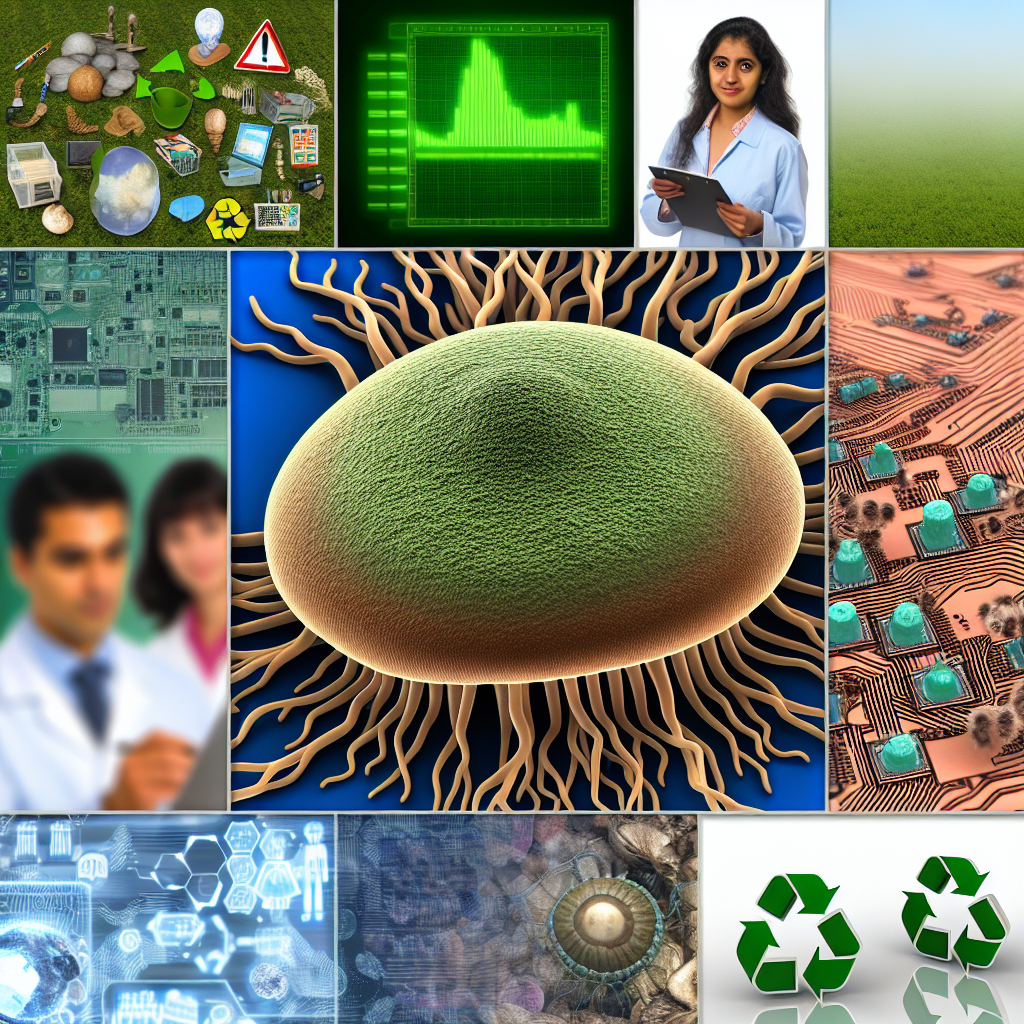
# Tech Meets Nature: How Mushroom Biochips Are Outperforming Semiconductors
**Introduction: The Fusion of Nature and Technology**
In an age defined by our reliance on electronic gadgets and the complex infrastructures that support them, the introduction of mushroom biochips marks a pivotal moment in the realm of computing and sustainability. These organic constructs, drawn from mycelium—the root structure of mushrooms—are not just an eco-friendly innovation; they signal a profound shift in how we can leverage nature to enhance technology. As millennials and Gen-Z tech enthusiasts, it’s essential to understand not only how mushroom biochips stand to revolutionize our devices but why the conversation around such innovations is critical for our future.
—
**A Shift in Thinking: What Are Mushroom Biochips?**
Mushroom biochips are an innovative exploration of mycelial networks, functioning at the intersection of biology and technology. Unlike conventional silicon semiconductors that have served as the backbone of modern electronic systems for decades, mushroom biochips utilize the natural electrical properties of mycelium to process information.
By intertwining these intricate mycelial structures with conductive materials, researchers have developed a new hybrid medium that might revolutionize the concept of processing. Receiving attention for their potential capabilities, they represent more than mere intrigue—they challenge us to rethink our tech dependencies and consider a biomimetic approach in a time of rising environmental concerns.
—
**Eco-Friendly and Efficient: Why We Need Biochips**
The challenges posed by conventional semiconductor production are becoming more apparent. As we consume vast amounts of electronic devices, we inadvertently churn out significant electronic waste and greenhouse gases. In contrast, mushroom biochips offer a glimmer of hope. They can be cultivated using minimal energy and are biodegradable—transforming how we conceive product life cycles.
Early studies exhibit promising results. Fresh off the experimental stages, mushroom biochips may not only meet but potentially surpass silicon performance in specific applications. Imagine devices that consume less power and yield higher performance with a significantly reduced carbon footprint. This evolution could alter our consumer landscape, allowing tech to become more sustainable and economically viable.
—
**Applications: From Computing to Medicine**
When we contemplate the potential applications for mushroom biochips, the breadth is staggering. Their capabilities extend from advanced computing to greatly advancing health technology. Picture a smartwatch constructed from eco-friendly materials that employs biofeedback technologies for precise health monitoring—it’s not just a sci-fi concept; this could soon be reality, thanks to biochips.
In the medical domain, mushroom biochips could herald a new generation of organic medical devices. These products would be adept at interfacing with human biology, leading to breakthroughs in personalized medicine and intelligent health monitoring systems, inherently more sustainable than traditional counterparts. The versatility of mushroom biochips in the Internet of Things (IoT) could redefine the technological ecosystems we rely on.
—
**Challenges on the Path to Mainstream Adoption**
Despite the exciting prospects, mushroom biochips are at the base of a steep hill with several challenges to overcome before they can fully integrate into mainstream technology. Scalability of production is a concern; current methods may not be readily translatable to mass manufacturing processes, leaving researchers to navigate this vital roadblock.
Just as significant are regulatory hurdles—ensuring biochips meet safety and efficiency standards is critical before they are widely embraced. Consumer acceptance also bears weight—many tech users still hesitate to adopt organic technologies, preferring the familiarity of established designs. Efforts to educate consumers on the benefits whilst being transparent about the limitations of these biochips will play a monumental role in fostering acceptance.
—
**Takeaway: A New Era in Technology?**
As we stand on the cusp of a possible future, mushroom biochips embody a more profound transition in our technological narrative. The fusion of environmental consciousness with advanced technology can provide solutions that meet the challenges posed by climate change and health disparities. For both millennials and Gen-Z, the implications of biochips resonate; they align with a generation increasingly attentive to sustainability in their choices.
Looking ahead, it’s clear that the solutions we seek may originate from the very earth beneath our feet—a potential horizon filled with possibilities. As this area of study progresses, one must consider: **How might our relationship with technology change if we prioritize sustainable innovations like mushroom biochips over traditional methods?**