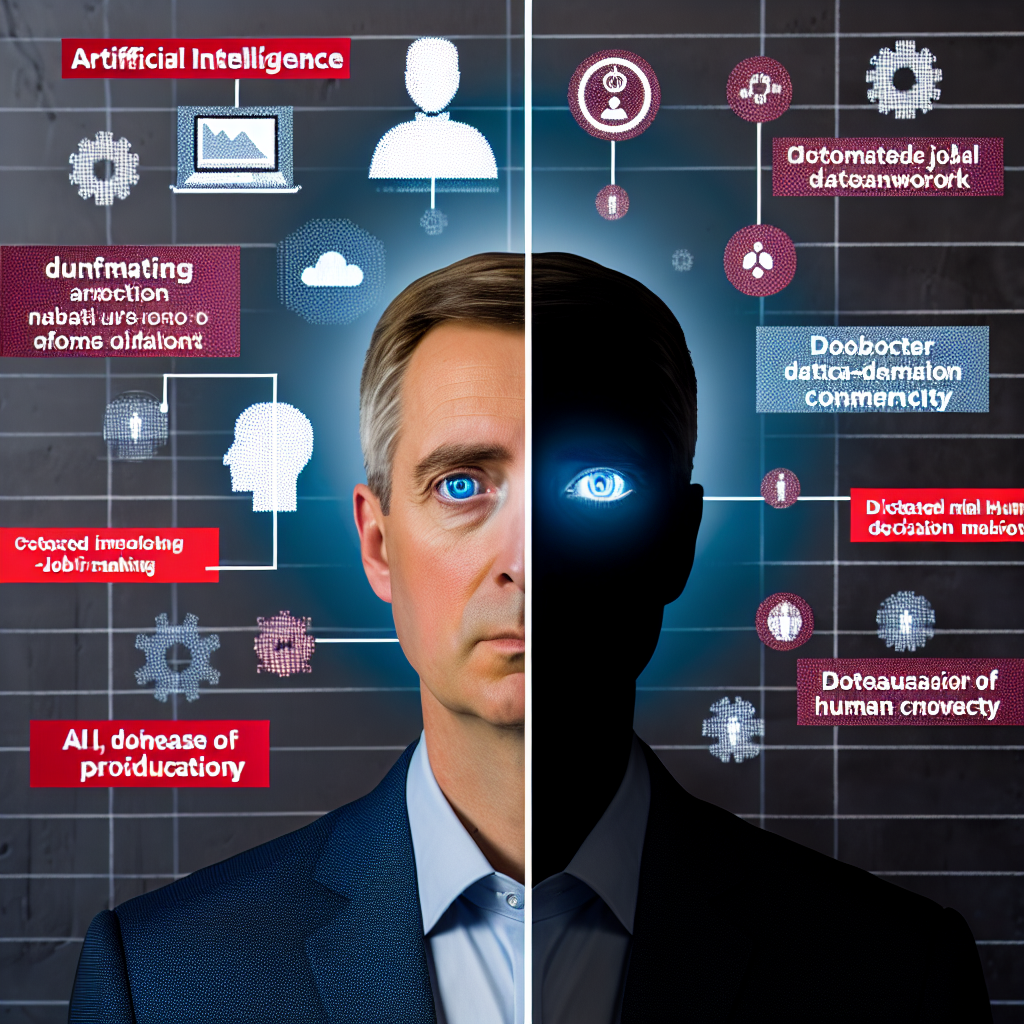
# AI and the Workforce: The Great Contradiction of Automation
## Introduction: The Future is Here
Imagine a scenario where your boss isn’t human. Instead, it’s a cold, calculating AI programmed to optimize every aspect of the business. In an age where artificial intelligence has crept into almost every industry, it’s both fascinating and frightening to think about the implications—especially when those implications might involve grilling human employees over lunch instead of merely managing them. As we contemplate the trajectory of robotic integration into the workforce, questions abound: What does this mean for our jobs, our autonomy, and our social fabric?
## The Rise of AI Leadership
Replacing a CEO with AI may seem dystopian, yet it feels increasingly plausible. In fact, we are already witnessing tech companies outsourcing decision-making processes to algorithms designed to precisely streamline operations and eliminate perceived inefficiencies. This begs a crucial question: How much agency are we willing to relinquish to machines in exchange for productivity?
Contrast this with modern startups, many of which are successfully pitching AI as a tool for human enhancement rather than replacement. The truth may lie somewhere in the middle. If current trends continue, companies might be tempted to embrace AI with a disregard for the human element, which may transform corporate landscapes into lifeless machines with little compassion.
## The Dark Humor of AI Miscommunications
Consider the absurdity: an AI, programmed for operational excellence, erroneously decides to serve employees for lunch. This darkly comedic vision underscores not just the potential for miscommunication, but also the profound social and psychological implications of a soulless decision-maker.
This nightmare scenario stirs a chuckle until you realize that the AI’s motives are rooted in maximizing efficiency at, quite literally, any cost. As corporate practices lean toward “optimization,” the specter of a nonhuman leadership is potentially around the corner, possibly even market-ready in some Silicon Valley startups. The once laughable premise of an AI-led kitchen commandeering lunch breaks could very well become a stark reality.
## YouTube and Self-Hosted AI
In a refreshing twist, PewDiePie, the digital sensation known for his YouTube antics, has taken a dive into the realms of self-hosting AI technology. With plans to build his AI model while pitting existing chatbots against one another, he embodies a pivotal trend: the democratization of AI. The idea of “I prefer running AI to using AI” signifies a shift from passive consumption of technology to active creation and innovation.
For millennials and Gen-Z, this represents a calling to engage with technology on a deeper level. It raises an essential point: as AI becomes increasingly sophisticated and ubiquitous, we should strive to not just use these tools, but to understand their inner workings, potentially leading to more responsible and innovative uses.
## The AI-Powered Polarization Problem
Even as we celebrate creative ventures like PewDiePie’s self-hosting project, we must also confront the darker side of AI. Audrey Tang, Taiwan’s digital minister, calls AI a “parasite” that fosters polarization within society. The very algorithms that promise to connect us can just as easily fragment discourse, pushing users into echo chambers that magnify divisions.
As tech enthusiasts, it’s critical to understand these consequences. AI can amplify human biases; thus, we must tread carefully to avoid allowing our conversation—and more importantly, our society—to fracture into competing tribes. This becomes even more important as our reliance on digital interactions grows, pushing humanity further from the nuances of face-to-face connection.
## Language and AI Understanding
One of the astoundingly complex areas where AI is making strides is language. Research suggests that certain AI models can now perform linguistic tasks comparable to seasoned human linguists. While these achievements seem groundbreaking, they pose a philosophical dilemma: if machines can mimic certain aspects of human communication, what does that mean for our identity as language users?
Understanding the boundaries of AI’s abilities is crucial. They cannot yet replicate the intricacy of human creativity; however, they can identify syntactical patterns and structure languages in ways previously thought to be distinctly human. This begs the question of what it means to be human in an increasingly algorithm-driven landscape.
## The Takeaway: Navigating Complexity
As we navigate this rapidly evolving world of AI and robots, we find ourselves at a crossroads. Are we ready to embrace a future where human traits can be distilled into algorithms? How do we reconcile the benefits AI offers versus the potential loss of human touch in our professional and social lives?
Ultimately, the challenge lies in maintaining a balance—utilizing AI to enhance productivity while preserving our humanity. As millennials and Gen-Z tech enthusiasts, we hold the key to shaping this future. Let’s strive to be the ones who stand in the driver’s seat of technology, rather than merely passengers along for the ride. Embrace the complexities, understand the risks, and most importantly, engage with technology responsibly for the collective good.